



6/30
This is where my head is, in my sleep, but also, usually, no matter where I am:
I thought it was Chicago. I took a left and walked for two blocks, what seemed like several hours, when I came to sign that read, “San Francisco Eatery,” and I was confused. The botanical courtyard stood in the middle of a two-lane round-about. When I sat down in the middle of it to rest, because my eyes were hazy and thoughts were grey too, my head dropped to two cold, bare feet on the dirty pavement.
When I saw these nice black, floral, ankle-high pumps under a bench I slipped them on. Soon enough a woman yelled, “Excuse me! Those are my shoes!”
“Oh, I’m sorry, I thought they were mine,” because I thought they really were.
“How can you steal people’s things?”
“I didn’t know. I didn’t mean to. I’m just very confused and don’t know where I am.”
“Did you just get back from Peace Corps?”
“Yes, I did!”
“I understand, I was a Peace Corps Volunteer too! I didn’t know where I was for a long time when I got back, things will get better, I promise!”
7/10
“Sasha, meet me at school. You need to help with computers.” This is how they speak here, in commands. Obediently, I go.
The girl who calls, Pervan, is not at school. I walk home. Turn on the fan, lay on my bed. The fan shuts off with the 8 o’clock electricity shortage. She calls again. “Sasha, where are you? I told you to meet me at school to help with computers.”
I go again. She is not there. I walk home. Lay on my bed in the corner of my swelteringly hot room.
“Sasha, where did you go? Why aren’t you here? You need to help with computers.”
“Are you going to be there when I get there?”
“Yes, of course.” This is the speed of development.
She is there, with a young girl, a smile like the swooping shape of a long bridge.
“Good morning, Sasha, how are you?”
“Fine, thanks. Where are we going?”
“There’s a new computer center in the middle of the village.”
“Really?”
It’s a small thing, an old white shack with blue trim, where diagrams for a mechanics course are hung in the halls. Dusty, crumpled, written in Cyrillic, they haven’t been touched in years.
There are three rooms here, and each house one or two computers where students type with one right index finger. The speed is like watching a beginner musician grapple with the
“What is this?”
Turial smiles. I met Turial at a wedding a couple weeks before when he modestly shook my hand and offered a curtsey. He is tall, and thin, and smiles ardently when speaking of possibility.
“They’re from the town center, from Baku, actually. The government wants to teach teachers to use computers.”
Indeed they do, but it’s a wonder they’ve provided my little village with HP Laptops to start.
“Other villages and the town center have them, too.”
“Well this is great. Are you teaching programs?”
“Yes. Here are the teachers.” He hands me a list of a couple familiar names and some he says are 30 minutes into the town center.
“Are the courses free?”
“No, this is not your class, Sasha! They are 90 manats.”
“Oh, that’s a lot.”
“No, for three months. One month is 30 manats.”
“When do they come?”
“Once a week.” Expensive.
“Can I teach?”
“Yes, we want you to help with English. We know Russian, but we need to know words in English.”
Through a Turkish translator online I found a Turkish to English 1200-page dictionary of computer terms.
Two days later I brought it on a flash with an Azerbaijani Foreign Leadership Exchange (FLEX) Program guide for study abroad students.
“Oh, this is very good, Sasha. Thanks. Can you teach an English conversation club here?”
“Sure. When do you want me to come?”
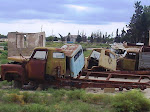
“3 o’clock, Monday, Tuesday and Wednesday.” It is noon on Wednesday, so at 3 o’clock I slap on sun block and hike back to the computer center under the tress, adjacent to the open field where rusted, tireless trucks lay vacant in the distance. No one is there.
Pervan calls me at 4 o’clock and I’ve already slipped into short shorts and flipped the fan to the highest level. “Maybe next week,” I tell her.
7/14 ONE MONTH TILL FLIGHT TO SFO
7/15
Lankaran is two hours north of Iran, and is a city known for its forest and waterfalls just out of the town center. I traveled to Lankaran this past weekend to give a presentation entitled “The Ins and Outs of Interactive Visual Aids” to the Azerbaijan English Teacher’s Association (AzETA).
On Sunday morning five teachers and three PCVs watched the PowerPoint presentation on how to use local products to construct aids you can touch, stick, turn and sometimes flip. I brought a human body that we constructed using a big, white sheet of paper, markers, cardboard, plastic wrap, hard wood and Velcro. Using few artistic skills, we crafted a human body and stuck Velcro to it. Using construction paper we cut out clothes for the body and glued each article of clothing to a piece of cardboard and then Velcro. The clothes rip on and off the body for winter, summer, fall, and spring apparel.
Other aids were drawings of verbs on flashcards that match up words from a list, clocks cut from construction paper and fastened with brads, and a mixed fairy tale where you arrange the pictures and sentences accordingly.
Teachers and Volunteers were elated. Through short exercises with the visual aids both recognized the value of physically interacting with the subject, and that the project at hand is cheap and very attainable.
So much of what we do as students in the U.S. is interactive: Speeches, science projects, art class. I think that we need more of it in our classrooms, more entrepreneurial and service-learning projects, to connect the world to students and visa versa.
That said, so much of what they do here is staunch memorization with no critical assessment or interaction with the subject being learned.
Providing students with interactive visual aids is so far from where we are in the U.S., but so close to where Azerbaijani educators and students need to be.
To introduce not just a method of teaching but a method of thinking and being is profound; that’s what this is: instead of simply thinking about the subject, interact with it, play with it, and question it. And when they recognize, “Yes, we can do this too,” oh, the profundity of it is overwhelmingly cheerful.
I’m really going to miss what I do here. It is by far the most rewarding work I’ve ever had, and I will be fortunate if I can come close to this feeling and stimulation in the way of a career.
Wednesday, July 15, 2009

Sunday, June 14, 2009
6/8
Arzu, or “Wish” is the new wedding palace just outside my village. Like most wedding palaces in Azerbaijan, it is a rusty red concrete block on the side the freeway. Inside hang few flashy ornaments, such aa disco ball which marks the center of the room. On stage, the bride and groom are behind a long fringed cream-colored table, the two barely visible behind baskets of fruit, plastic rose bouquets, and boxed and bottled Russian beverages.
The newlyweds’ faces are blank, which could be interpreted as boredom, sadness, or seriousness—the latter, having not yet caught on to the speed of point and shoot cameras, the affection exhibited in most Azeri photographs. In the case of this bride, Farida Ibrahamova, I would guess it’s as sense of neutrality to the whole experience.
Guests’ tables are draped with fine white linen. Early season tomatoes and cucumbers are first to arrive. Stalichni salad of tiny potatoes, carrots, jarred peas, eggs, chunks of soft beef, mayonnaise, and salt and pepper are served, accompanied by grape leaf dolma topped with homemade bitter yogurt, and salty, fried local stuffed sturgeon. Plov, the national meal served with chigertma, a greasy dish of chicken, eggs, sautéed tomato and ghee, is the main course. Fanta, Coca-cola and fizzy water are the drink of choice on the women’s side, while vodka and red wine is a staple of the men’s.
Azerbaijani weddings are like a seven hour reception, so as the parade of food begins so do the speeches. One by one male family members drunkenly congratulate the bride and groom in repetitious lines as we do in America: “I hope your life together will happy, successful and healthy, with lots of babies!” Then the variation to modern American wishes: “And may the bride be obedient and take care of you and your children well, and cook and clean, so you can provide for your family! Best of luck!”
After each speech is lauded, the man’s immediate and extended family members dance to traditional music from the live, hired mugam band. There are no discotecks or night clubs in the regions of Azerbaijan, so Azeris pour six months of pent up moves and angst onto the dance floor.
It is now that face of the 23 years of solitude smiles, twirling with friends her husband has for months forbidden her to visit.
I dance after the director of our school exhibits his wistful but authoritarian smile to the audience. My loose wrists are tossed into the air and I shake and shake them in a pattern that compliments the accordion, tar and throatal singing of the short, stocky man on stage. I still don’t know what to do with my feet and I tell this to Nushaba but she responds, “No, Sasha, you dance like an Azeri now. It is very nice.” Apparently they also don’t know what to do with their feet.
I maneuver those awkward steps across the dance floor to photograph two young girls bounce around a 20-something male, an act acceptable exclusively at weddings. I snap a couple neighbors and they immediately ask for prints. “When I go to Baku,” I promise.
“I love him, Sasha, but he is a strict man,” she would tell me the year of her engagement.
“Farida, if Jeyhun does not let you come to my house for two hours to watch a film, this is not strict, this is crazy.”
I am seated with neighbors who are excited to see me dance, laugh and speak casually with locals on a non-work related basis.
“Sasha, you know the U.S. economy is very bad. And there’s bird flu. You can’t go back there. You have to stay, Sasha. You have to stay.”
“That is very kind, but I miss my friends and family very much.”
“But the food is very good here!”
“Yes, that’s true.”
“Do you like the wedding, Sasha?”
“Yes, you know, every wedding I go to I like better. I understand everything better, the food is my own now, I know every one and I can speak with them. It’s nice, thanks.”
Jeyhun is Farida’s cousin. “Disgusting,” we think. In reality, to ensure a positive relationship, free from unsolicited fornication and physical abuse, you marry someone you already know. Someone who knows your family and customs, parental expectations; someone you know will—above all else—keep you safe. That someone is most immediately your cousin.
Farida is wearing a strikingly blue dress to match her husband’s blue collared shirt and blue tie. She stares into the audience positioned upright, hands folded in her lap. She eats cautiously as all are watching on the three monitors hung on different sides of the room. The formality overshadows her shear eloquence.
“You can’t sleep all the time, Farida,” I would tell her weeks preceding the ceremony.
“I know, but I have nothing to do. Just sit. Then watch T.V. Help my mother.”
“Maybe you could read or something. It’s unhealthy, Farida.”
“I think it will be better, Sasha. When Jeyhun get out of army we move to Turkey. There he can paint.” And what will you do, Farida?
Farida would never break off the wedding. Too much shame and honor missed. Neighbors and family would judge. Family may not “take her back.”
But many women in America hang on because it’s shameful to do otherwise, too. Many women return to their husbands out of fear of dishonor and displacement from their community. Many women stay because they don’t know what to do or where to go otherwise.
Azerbaijanis do not have a positive view of the Western tradition of love and marriage. In America, divorce filings are common as weddings. From what Azerbaijanis see on film, affairs occupy a comfortable place in a “successful” marriage. From my experience, this state of affair is not far from the truth.
In Azerbaijan, they are trying to hold onto what I see as a broken system; but wouldn’t you say we’re doing the same? Limited access to marriage, affairs, contracts and annulments, secrets, broken homes, scarred children.
I would take our broken system over theirs any lifetime, but the more I understand this culture the more similarities I see with ours. Maybe we don’t have arranged marriages, but we have arranged social norms just like every other country in the world.
I asked yesterday as she was displaying the furniture fit for their new home what she will do if Jeyhun doesn’t let her work.
“I want to work, Sasha. But Jeyhun says ‘no.’ If he doesn’t, then I don’t know. We must see how it will be.”
6/14
Our supermarket is about half the size of a 7/11, though it shelves about three times its contents. It is located at the swooping turn on the main road, a faultless location for village residents. The store owner, Mahanmet, is also the P.E. teacher at school, and fittingly so, a real big guy.
“Sasha! How are you?” he laughs. After having facilitated football and volleyball lessons during the week, Mahanmet appears only on the weekends. He helps shelve cans and carries deliveries to the back, but mostly he watches his son and his son’s childhood friend run supplies and tally customer orders.
“Would you like tea?” He asks, seated on the lone aisle between boxes of almonds and imitation Snickers.
“Yes I would, thank you!”
Mahanmet Teacher heaves himself out of his chair and orders me to have a seat and relax.
“I will get the food for you as you drink your tea,” says the assistant shop keeper Mahir, as he hands me three pieces of nut-filled chocolates. “You can eat whatever you’d like here” he reminds me. He points to the plastic covered boxes filled with paklava and sugar cookies, which Azerbaijanis buy by the kilo. It reminds of the barrels of fig newtons at Pack ’n’ Save, which as a kid I lauded as a great supermarket innovation.
A couple months ago Mahanmet Teacher asked me why I left every weekend to the town north. “Do you want to get out of the village?”
“Well, yes, and I help the volunteer there, Jenni, do a swimming club. But I also go there to buy things I can’t get here.”
“What?! What can’t you get here?”
“Milk, lavash, different kinds of bread besides Baku bread, yellow cheese, toilet paper—” He stops me there, wide-eyed, like I said “Paper to wipe my poopy ass with.”
“I don’t eat cheese, Sasha, it’s not healthy.” Just what a P.E. coach in his condition would say.
Still, as Azerbaijanis would, two days later I returned to Mahanmet’s to discover brie and camberet. Today we have sliced white cheese and gouda. He remains stocked with toilet paper, milk and “black bread” which is the shape and texture of whole grain, and which I now slice nearly every morning to enjoy with over easy eggs.
“Sasha, what do you want?” asks Mahir.
“A half a kilo of tomatoes. Two peppers. Two garlics.”
“And then?”
“Three-cow cheese—“
“Sasha, your Azerbaijani is clean. You have learned our language, but you will forget it when you leave.”
“Yes, I know. When I come back to Azerbaijan in five years I will not know your language any more.”
Struck by the suggestion that I’d come back, he responded, “Thank you, Sasha. It’s ok you will forget, that will happen.”
Mahir finishes my order as I hit the loose leaves at the bottom of the pear glass.
“Do you want more tea, Sasha? Anything else we can get you?”
This is what they do here, not just for me, but for other guests, too.
“Oh no, thank you, I’m done. That’s it. How much is it?”“Two manats, 60 gepik.”
As negative as I am here, these people care for me. They care for me in a way my American neighbors and shop owners never have or will. Our “get-it-yourself” attitude is one I miss, yet one I may have trouble adjusting to when I get back.
“Ok, thanks. See you later!”
“Sasha, thank you! Come drink tea when you’d like!”
Wednesday, June 3, 2009
Summer Softball
Students gain teamwork and inclusion skills, and learn to pitch a ball windmill style here:
https://www.peacecorps.gov/index.cfm?shell=resources.donors.contribute.projDetail&projdesc=314-052
Donate a buck or few, any amount'll do!
https://www.peacecorps.gov/index.cfm?shell=resources.donors.contribute.projDetail&projdesc=314-052
Donate a buck or few, any amount'll do!
Tuesday, May 5, 2009
 4/21/09
Playlist #7: thesearetherunningsongs
“Sasha, what are you doing?” Common question here, warranted or not.
“I’m running.”
“Why?”
“It’s good for your health. And since I’ve been in Azerbaijan I’ve gotten bigger.” I roll my hands over my stomach.
“Aren’t you cold?” I am wearing a neon green Azerbaijan t-shirt and black sweats to cover the unmentionable parts of my body i.e., my knees.
“A little. But I will run and then I will be hot.”
“You will get sick.”
“No, I will be fine.”
“Sasha, please put a jacket on.”
“No, I’m running, I’ll be fine.”
I throw a wave and take off, iPod sharing Wilco’s “Misunderstood,” apartment’s skeleton key in pocket, positive thoughts for “five months, five pounds,” and not a clue as to where the dirt path may lead.
I’ve been here for over 20 months, but the farthest I walk is to my counterpart’s, 15 minutes from my apartment, 10 if I take the side roads.
Two things come of this: 20 pounds, and me not knowing my 2 by 0.5 mile village.
My first day running puts me behind School #1, straight into a group of disrespect. Soccer boys, high on maleness, in unison, stop to stare. I begin to run toward a fence since I can’t see into the deep sun, but one of the boys from my seventh grade class uncharacteristically warns me otherwise: “Go over the ditch, Sasha Teacher!”
I U-turn, and placing one slow foot in front of the other, balance a slippery mud pipe under my feet. Below is trash, feces, and chickens eating the trash and feces, and if I fall I remind myself I have no place for a decent shower so I construct I detailed scuttle across the big metal cylinder, which means fast, real fast.
Then I run: for 20 minutes, on soft, uneven dirt road.
I see the woodshop teacher driving with his car of young sons, three of which I didn’t know he had, and when we make eye contact he laughs. At me. So I wave back and laugh too, which has been a pivotal lesson in my Peace Corps service: If you can’t beat ‘em, join ‘em.
I run far and jump piles upon piles of fresh manure.
Khanims, old and young, see me coming and drop their big potato bags full of bread and ask me what the hell I’m doing. “Exercising,” I say, and I keep running with concentration, determination and The Clash screaming, “Everybody wants a ride on the rockin’ roller coaster.”
I’m in the clear till I hit the levy on the crazy Kur, where rabid dogs are sure to congregate. I run into three, four, and each time we back off one another, in hopes that he won’t bite and I won’t throw heavy rocks.
I run off the levy, back to the three-house street I pleasantly consider my neighborhood.
The shop owner Abdullah turns, they all turn, like it’s the first time they’ve seen this here American. In reality it’s just the first time they’ve seen this American this fast, this determined, this sweaty, and being this American.
This was two weeks ago and since, I feel like I’ve made real progress in my quaint but conservative Azerbaijani settlement.
“Are you exercising today too?” asked Nativan Teacher. “That’s good, Sasha. If I could, I would run with you.”
Allow me to translate: If people wouldn’t judge me, I’d run. If they wouldn’t say I’m trying to catch the attention of men, I’d run. If all the traditions, and all the silly social norms and gender roles didn’t dictate my everyday and what I want for my children and the whole of my country, I would run.
5/5/09
Just finished Empire Falls by Richard Russo. Highly recommended.
Playlist #8: hisfaceistopographicallychallenged
On my first day of school in my small village town, a terribly short, crater-faced man most literally ran up to me to announce: “Hello, I am Shahin Teacher. I have a music tape.”
“Oh, that’s great. It’s in English?”
“Yes, in English. It is Jane Child. She have very nice voice.”
“Oh, good.”
“But only one problem.”
“What’s that?”
“I don’t know what she says.” I look away, like I don’t know what’s coming. “Can you transcribe tape for me?”
“Sure, Shahin Teacher. But I just got here, so when I have time.”
“You can?! Oh, that is great. Thank you. I wait long time to meet American.” To transcribe a Jane Child tape. Glad my skills are coming in handy my first week as a Volunteer.
 Modern Talking
Shahin and I talk about music a lot, mostly because music and T.V. is where he’s learned most of his English from.
It’s for this reason Shahin, as a geography teacher, has superior listening and speaking skills to most English teachers’ here. Shahin says things like, “No problem” instead of “It is not a problem,” and “I’m good” instead of “I am very well, thank you.”
The other day were talking about Obama’s blackness (Which is usually like, “Obama is black,” and I say, “Yes, he is.”) when I asked, “What are some other singers or groups you like, Shahin? Did you say you like Talking Heads?”
“Uh, Modern Talking. Also, Michael Jackson, Sarah O'Connor, maybe Kanye West.” ‘Maybe’, which is a synonym for ‘kind of’ in Azerbaijani-English, tells me Shahin likes pop and rap.
“Would you like a mix of songs, Shahin? On a CD?”
“Oh no, I have no CD. Only tape.”
“Are you going to buy a computer like other teachers here?”
“Oh no, I don’t need. But maybe I can take CD to other friend’s house and listen. If I like, I keep, if I don’t like I—“ He flipped his hand to the side like he was throwing crumpled paper to the waste basket.
“Ok, Shahin.”
“Can you bring tomorrow?”
“Sure.”
“But can I ask you question?”
“Sure, Shahin.”
“Why you take that photo of monument in Europe?”
“What?”
“That photo of child.” He’s referring to the delicate, if half-heartedly amusing naked baby peeing into a concrete bowl in Prague. It’s quite
“Oh, you know, it’s nice. I take pictures of buildings, nice architecture, statues.”
“Oh, I was just thinking, just wondering because—do all American girls like this?” Penises?
“Sure, art. We like art, Shahin.”
“Ok, thank you, just wondering, you know.”
Here is my soundtrack to Shahin Teacher:
Walk Like an Egyptian, the Bangles
Pony, Ginuwine
Dancing With Myself, Billy Idol
Crossroads, Bone Thugs N Harmony
Do You Really Wanna Hurt Me, Boy George and Culture Club
Gonna Make You Sweat, C&C Music Factory
1, 2, 3, 4 (Sumpin’ New), Coolio
Slap! Slap! Slap!, Da Brat/Jade/Missy Elliot
Down For Whatever, Ice Cube
Like I Love You, Justin Timberlake
Lost in Emotion, Lisa Lisa & Cult Jam
Gin and Juice, Snoop Dog
Love Rollercoaster, Ohio Players
Big Time, Peter Gabriel
Shoop, Salt-N-Pepa
You Can’t Hurry Love, Phil Collins
Champion, Kanye West
Playlist #9: ilikeforher
“Why is sheep not in circus?”
“I don’t know, Nushaba.”
“Have you ever seen sheep in circus? You see bear, horse, lion, zebra, bird, everything, no sheep.”
“True. I don’t think I’ve ever seen sheep at a circus. But I’ve only been to a circus once.”
“Why? Because they are dumb animals. Sheep. My husband wants to get sheep, but I think, why? I don’t know, I was just thinking about this maybe few days ago. No, I don’t want these, sheep.”
Friday, April 10, 2009
1/3/09
Snow
It began early morning winter, let up mid day, but settled in a night’s sky. Its chill has been felt in the thin air since. A week ago the season veered torrential. Little ones watched the world blowing this way and that from their window. Tired neighbors huddled by fires, and those without heat tucked under heavy woolen blankets. Big shops closed. Cars wouldn’t start.
I awoke to the turn. In my home, what came with the white wonders of winter was no gas, no electricity, no water, and a dying cell phone.
As the beep on my Siemans screamed its final seconds, I texted my go-to in times like this: “I’m coming.”
Yes, that’s a great idea! Go! You should get out while you still can! yelled my neighbors I slushed in the fresh white to the bus stop.
But in the big city three hours north of my town, the weather was far worse. The froth in the air was a call to far-north China Volunteers. My tiny toes were frost bitten with the bus ride, and outside snow had dried to ice, which stuck hard to the sidewalks.
“Where is the ice skating rink?” I asked Kelsey.
“We’re coming to it,” she replied, as we followed the dense, uneven ice across the train tracks.
Into the braze of the bazaar, Kelsey, whose enthusiasm for Iowa could win her some sort of award, began, “In Iowa, we call this black ice.” I nodded, assuring that only in Iowa they call it such. “You can slip and fall on this. See,” she pointed to the circular puddle with chunks of frozen molt, “black ice.”
Our limbs tripped to the ground as Kels reasoned, “Why don’t they put salt on this?” I hadn’t thought of this. They do that in the Sierras, up 50, I think.
Endlessly brainstorming best practices for development, we agreed salt shakers and the two of us would best accomplish this job.
Above our heads icicles held tight to ends of towels. After women use bare hands to wash linen, they hang the linen on lines connected to old, rusted polls which cause them to freeze and melt onto heads.
These are things I didn’t know about snow. I didn’t grow up in cold climate, so momentarily powder is Godsend; it is witnessing perfection in a chilled instant. It covers trash, feeds plants, and creates fresh water droplets for the little spotted birds that nest above my balcony. It selflessly delivers so much to the earth.
But Eric once told me that in Maine citizens wake to frozen car engines. Sometimes it gets so cold one has to rush to his destination in 30 seconds or less to avoid frost bite and losing a limb. What the fuck?
There is one grave difference between Maine and Azerbaijan: In America there is central heating, and here there is a small gas petch, like the ones cowboys in Western films to warm their hands by after a long ride in from town.
Most of this country, including the capital, is not set up for the condition it’s in. Pipes freeze because they are not wrapped or secured underground. When roads aren’t paved, days after snow, the melt-off freezes, while offside mud becomes fixed to the bottom of my boots.
Nearing the tarped green bazaar, I explained to Kelsey that this is what Sacramento would be like if it snowed. America would have to come a long way for that to happen, she assured me, as she pointed to the skating rink which is the road to the bazaar.
3/14
My Computer is Working at the Moment. That is a title and a statement.
It might be the electricity. Since Referendum Day and Novruz, the most celebrated holiday in Azerbaijan, are forthcoming, the power has been on most of the time.
Perhaps Allah heard my counterpart’s prayers. “I prayed that your computer would work so I can have your music.” Or maybe I have been plugging something in upside down, or have had the computer positioned at an odd angle, a display of my eternal inadequacy of operating Western technology. All likely stories, where water flows and oil shoots from the ground, yet operate with as much certainty as my mind.
 “Sasha Teacher, is ‘set’ a word?” “Yes, Salam, but what does it mean?” “Pen?” “No.” “Table.” “Uh-uh.” “Ummm. Cup?” he points to the miniature coffee mug set on the table next to the pen. “No Salam.”
Simple games like Scrabble, Hang Man and versions of Pictionary are surprisingly popular with these little folk.
The dialogue-centered conversation club switched to an English games club when I noticed students like Salam taking more water breaks than wanting to participate in Q and A round-robin exercises.
Scrabble is now part of my weekly routine. To simplify the game (No, I have nixed rules like you can’t attach words to the tail end of another, while I’ve added others such as you must know the translation of a word to play it.
In the end, the board looks more like Boggle than Scrabble:
Snow
It began early morning winter, let up mid day, but settled in a night’s sky. Its chill has been felt in the thin air since. A week ago the season veered torrential. Little ones watched the world blowing this way and that from their window. Tired neighbors huddled by fires, and those without heat tucked under heavy woolen blankets. Big shops closed. Cars wouldn’t start.
I awoke to the turn. In my home, what came with the white wonders of winter was no gas, no electricity, no water, and a dying cell phone.
As the beep on my Siemans screamed its final seconds, I texted my go-to in times like this: “I’m coming.”
Yes, that’s a great idea! Go! You should get out while you still can! yelled my neighbors I slushed in the fresh white to the bus stop.
But in the big city three hours north of my town, the weather was far worse. The froth in the air was a call to far-north China Volunteers. My tiny toes were frost bitten with the bus ride, and outside snow had dried to ice, which stuck hard to the sidewalks.
“Where is the ice skating rink?” I asked Kelsey.
“We’re coming to it,” she replied, as we followed the dense, uneven ice across the train tracks.
Into the braze of the bazaar, Kelsey, whose enthusiasm for Iowa could win her some sort of award, began, “In Iowa, we call this black ice.” I nodded, assuring that only in Iowa they call it such. “You can slip and fall on this. See,” she pointed to the circular puddle with chunks of frozen molt, “black ice.”
Our limbs tripped to the ground as Kels reasoned, “Why don’t they put salt on this?” I hadn’t thought of this. They do that in the Sierras, up 50, I think.
Endlessly brainstorming best practices for development, we agreed salt shakers and the two of us would best accomplish this job.
Above our heads icicles held tight to ends of towels. After women use bare hands to wash linen, they hang the linen on lines connected to old, rusted polls which cause them to freeze and melt onto heads.
These are things I didn’t know about snow. I didn’t grow up in cold climate, so momentarily powder is Godsend; it is witnessing perfection in a chilled instant. It covers trash, feeds plants, and creates fresh water droplets for the little spotted birds that nest above my balcony. It selflessly delivers so much to the earth.
But Eric once told me that in Maine citizens wake to frozen car engines. Sometimes it gets so cold one has to rush to his destination in 30 seconds or less to avoid frost bite and losing a limb. What the fuck?
There is one grave difference between Maine and Azerbaijan: In America there is central heating, and here there is a small gas petch, like the ones cowboys in Western films to warm their hands by after a long ride in from town.
Most of this country, including the capital, is not set up for the condition it’s in. Pipes freeze because they are not wrapped or secured underground. When roads aren’t paved, days after snow, the melt-off freezes, while offside mud becomes fixed to the bottom of my boots.
Nearing the tarped green bazaar, I explained to Kelsey that this is what Sacramento would be like if it snowed. America would have to come a long way for that to happen, she assured me, as she pointed to the skating rink which is the road to the bazaar.
3/14
My Computer is Working at the Moment. That is a title and a statement.
It might be the electricity. Since Referendum Day and Novruz, the most celebrated holiday in Azerbaijan, are forthcoming, the power has been on most of the time.
Perhaps Allah heard my counterpart’s prayers. “I prayed that your computer would work so I can have your music.” Or maybe I have been plugging something in upside down, or have had the computer positioned at an odd angle, a display of my eternal inadequacy of operating Western technology. All likely stories, where water flows and oil shoots from the ground, yet operate with as much certainty as my mind.
“Sasha Teacher, is ‘set’ a word?” “Yes, Salam, but what does it mean?” “Pen?” “No.” “Table.” “Uh-uh.” “Ummm. Cup?” he points to the miniature coffee mug set on the table next to the pen. “No Salam.”Simple games like Scrabble, Hang Man and versions of Pictionary are surprisingly popular with these little folk.
The dialogue-centered conversation club switched to an English games club when I noticed students like Salam taking more water breaks than wanting to participate in Q and A round-robin exercises.
Scrabble is now part of my weekly routine. To simplify the game (No, I have nixed rules like you can’t attach words to the tail end of another, while I’ve added others such as you must know the translation of a word to play it.
In the end, the board looks more like Boggle than Scrabble:
 I am not a game person. I’d rather cuddle with a book or watch a B-list film than run a monotonous board for hours on end. Unfortunately, for both her and me, the Volunteer closest in distance to my town is a board game fanatic. But playing with fifth graders whose English is limited to five-letter words and simple sentences has made me understand the value of games I once felt redundant. I should reconsider Settlers of Catan with Jenni on a southern night.
“Sasha Teacher, is, ‘zap’ a word?” What an excellent word!, one that can’t be dismissed because of silly teacher-rules. “Fourteen points, Salaam.”
3/16
Plans with a capital P
People are beginning to talk. About leaving. Peace Corps has posted the Close of Service date. This is where we travel to Baku for paperwork and lectures on ‘post-Peace Corps life." See, the problem is that this was such a goal since the day I heard of such a romantic, hard-core experience, that I haven’t really gotten around to thinking about what could happen next. I mean, I have, like I could get a master’s I suppose, or try to find a job at the hopeful end of our economic delirium (that’s what it is, right?). I guess those are plans. But they’re not Plans. A Plan. I should have some sort of Plan.
Most of the people I know don’t have a Plan, though I have always been this kind of girl, a girl with a Plan. Well into the tail end of my junior year of high school I didn’t know I could go to college at all, little lone receive good enough grades to carry me to where I am now (however much living in the middle of a banana republic no one has heard of is worth). But I always knew I would not be where I once was, and that was the Plan. Ok, so now that I’m out, where am I going?
I want to work. I want to be doing something, like I’m doing here, and which, school, even through a master’s program, doesn’t leave room for. There’s a lotta time in a college day, but not the kind that universities are willing to expend. Head in book. Research. Write paper. Repeat process. But then, I miss this. Why do I miss this? I want good talk, good reads and good discussion ya can't get in the work place, I s'pose.
Chicago Schools Service-learning Program looks inspiring. There’s the doing in education. But do I have to go to back to school to work in schools there? A credential with a master’s? More school. One sister wants me in Portland, temporarily a city too small for my ultra-, super-city radar. Add millions of people to the scene and get New York. From village, Azerbaijan to the Big Apple, perhaps a bit of a culture shock. New Orleans was suggested by a friend the other day. Or Philadelphia, where Peace Corps orientation was held—they had a pretty kickin’ night scene. Seattle. Too rainy. L.A.= shit. Detroit. Dirty and down-trodden, I hear. Dallas. Hot. Also hot: Sacramento. Hasn’t even occurred to me to go back there.
And ahhhh, San Francisco. So many friends have left San Francisco and the places I frequented, and really that’s from where my love of the place resonates. Also, it seems a stepping-stone city, the way a bachelor’s is a stepping stone to a master’s. I should go to a bigger city, with more people, and more potential! But why? So much energy, the kind that expires after five in the afternoon tailing to and from the places of doing. This is a very exhausting exercise. Maybe I want to chill in a village in America for a couple years. Do we have those?
Well, I suppose this reads more like a journal entry than a blog. Or does it? I should read blogs. Add that to my of Post-PC To-Do List.
Ok, so here’s the Plan, me, readers: I am going to come back in approximately five months and find a job. Or something. Maybe go back to school. Somewhere. Sounds about as reasonable as living in Azerbaijan.
4/1
Hasan Baba was a cool cat. He dressed himself in a pale blue brimmed golfer’s hat and dark flip shade glasses. Every day he sat on a rock to collect thoughts and say salaams to passerbys. Sometimes his buddies, who were quaint and cool like him, would gather around the rock to read verse from the Koran. They too would wave hi to passerbys and greet newcomers like me with great sincerity. More often than not, though, this is where you could find Baba, pressing his cane to the earth and puffing a cigarette whose smoke drifted to the Kur, just beyond the old bath house and gray, dilapidated levee. Forty meters west of this rock is where Hasan Baba grew up, and where, in his sleep, on March 31, Hasan Baba passed away.
Grandpa Hasan was the first local I met in my village. He was far more thrilled to meet me than I him. “Who is this?!” he laughed, clapping his hands and stomping his eternally white sneakers. He looked around to see if anyone else was seeing what he was seeing: a blond-haired, blue-eyed American girl fresh from California, something in all his years he had only recently viewed with clarity via E! on satellite television. “What is she doing here?!” he would laugh.
Gizbast Teacher, my counterpart and his loving daughter-in-law, has prepared the mourning ceremony. I’m not sure what it’s called here, though I suppose it would be the equivalent of a wake.
There are two rooms: the men’s is under a blue tarp outside, and the women’s in one of Hasan Baba’s bedrooms. “Go sit, Sasha. There they cry,” instructs Farida. She points to the women’s room where, poised on a traditional burgundy carpet, the female mullah sings hymns, praises Baba and begs God to receive his body well.
Women are pleased to see me and whisper smiles when I enter the room. They chant, urge me to join, and we lightly slap thighs in unison. This strikes a deep air of sadness and laughter, much like Hasan Baba himself.
“Hasan Baba can’t hear very well,” his son Abdullah would say. “You have to speak loud for him. Dad! Dad! Do you want more bosboscht?!”
“Would you quiet down?! I’m not deaf! And no, I don’t want more tea!”
Gizbast Teacher would explain to Baba why I have come to Azerbaijan and his village in particular, and either for his veiled disinterest or his hard of hearing, Baba’s small eyes would drift to the ceiling and slowly back to his bi-weekly Turkish serial. “Ok! Thank you for being here!” he would laugh.
Hundreds of people have come to mourn already. Some stay to help with cooking, others for only the prayer ceremony. Most everyone in the community, and family from distant cities, will come to weep for Baba.
After the long, deep prayer we eat a meal prepared by Gizbast, the daughter. The women ask about my being there, in the room, and in their village so far away from my own family where this very event could happen too. They ask me for more tea, which I now consider a gesture of treating me as their own, rather than a servant girl I once thought I was. I serve them and we speak for another hour before I excuse myself to a tutoring lesson at four.
I would like to think Hasan Baba and I shared a special bond. When Gizbast Teacher would complain that Baba spends too much time alone, I would defend him, reminding Gizbast that he is old and has spent many years with family and friends, and needs time to reflect. We would laugh at the way his family would yell in his ear, and turn up the T.V. full blast just for him. He would try to tell me about the Soviet Union, not because he wanted to reflect, but because I was an inquisitive youth, and he was a teacher.
Hasan Baba was 88 years old. In Azerbaijani terms, that’s like 130. People just don’t live that long. 55. 60. 65, that’s a good run. Eighty-eight years old. “He’s a hero to our people,” says my co-teacher Nushaba.
For all I know, Hasan Baba could have been a hero. He lived through the rise and fall an empire, and everything that came and went with it: jobs and job security, falling infrastructure, and dissenters’ imprisonments and deaths, many of whom were his friends.
For the spirit to safely reach God, it must be laid to rest as soon as possible. Within 12 hours, Hasan Baba is carried with 15 men to our village cemetery. They march the dirt path while women weep and wave handkerchiefs from Hasan Baba’s balcony. Now, along with the grieving indoors, loved ones can lay flowers on his grave.
Every Thursday for the next week friends will come to Hasan Baba’s to say a prayer. They will visit Baba’s family on Novruz, for Ramazan, and again, one year after his death day.
In Islam the mourning period is seven days, though because it’s not affordable for Gizbast’s family, this one will be only four. “We wanted Baba to see wedding. Mine and Jeyhun,” says Farida, who on Sunday had set her wedding celebration for April 25. She and her brother, both who will marry soon, must postpone their weddings for 40 days after Hasan’s death. This is the amount of days it takes a family to cry, says Farida.
Funerals in America are distant and brief, like too many of the relationships we hold. The
clapping, the chants, the crying and laughing, confined to a room in a moment of remembrance. On Hasan Baba’s death day, and on my birthday, I have been able to grieve.
Monday, December 22, 2008
Highlights of a day's work:
“Sasha, I am sorry I am late for class, I was arguing with Hamana Muellim (Teacher) over grammar.” It’s how they release sexual tension, arguing grammar rules. “Read this: I work the most of all. Would you say this?” “Sure. What’s wrong with it?” She’s dying to tell me. “You do not use the here. It should be ‘I work most of all.’” “Why? I would say,” and I write, “Of all the students, she is the best singer.” “No, it is not the same! ‘Best’ is an adjective here.” “Yeah, it doesn’t matter—” “It does matter! But Hamana said that words there are some verbs that act as nouns, and are treated as nouns in this sentence.” “Well, yeah, but—” “I don't really understand what she is saying. I have not learned this. If it is true, I must tell all my students about this adverb.” “I don’t know, it’s what we say—” “You would say, ‘She sang worst of all the students.’” “No, I would say, ‘Of all the students, she sang the worst.’” She literally threw the pen on the desk. I will hear about this tomorrow, in a “See, I told you” kind of way.
“Sasha, come to my house to teach me computer,” so I did, and she was like, “I want to know about English grammar. Are there grammar games on here?” “No, I don’t have any grammar games, but you can get them from the internet.” “Ok.” “Ok. Do you have internet?” “No, but you do. You have computer.” “Yeah, but there’s no internet in the computer. Do you have a telephone line?” “No.” “Then you can’t have internet.” “But you have computer.”
“Sasha, light the petch. Don’t be scared.” “I’m scared, Yusif.” It’s a fucking torch. “I will light it, don’t turn it off.” “What if I have to leave?” “Keep it on.” “When I go to bed?” “Keep it on. Tomorrow, what time do you come home from school?” “Twelve o’clock.” “Keep it on…If you need to turn it off, turn it off here, here and here, or it will explode, Kapppewww!”
Wednesday, December 17, 2008
1. The temperature in my apartment has been dropping a degree for four consecutive days. The gauge currently reads 6 degrees Celsius. If it continues at this rate, I should awake to a white Christmas on my face.
2. Kelsey on how to check if I turned off the stove: “Put your detector next to it, if it doesn’t beep then gas isn’t leaking, or your detector is broken.”
3. “Eat! Eat!”
“I’m full! I can’t!” I’d shouted back.
“Sasha, eat!”
The puke is coming, I know it. I can’t tear off fat from the goose meat, or sip more oil-salt based soup.
“Eat bread, Sasha!”
Now putting the spoon down. Host mother will be offended.
“I can’t, Sevda!”
“Sasha, eat!”
“I’m full!”
“Do you want tea?”
If I have tea I have to have cookies. But if I say no, she’ll be offended.
“No, I don’t want any.”
“No?! But you must! Drink tea!”
“I can’t!”
“Just one cup, Sasha.”
I felt like a toddler, crying when I wanted food, screaming when I didn’t. Explaining I have to wear leggings to school to cover my tattoo, defending why I have one in the first place. Insisting I can walk to school on my own, and travel to Baku on the bus, even with the language barrier. Trying to communicate I want to be alone, when in reality I never will be, not Azerbaijan.
In the first weeks with my training host family I couldn’t convey my displeasure for bosbocht again, or my discomfort with blaring midnight mugam music for the fifth night in a row. So I’d shut myself inside my room, inside my sleeping bag, with a headlamp and a book that would take me back to green, warm valley.
When we’re sad, this is what a lot of us Americans do: take a time out, and maybe cry alone, internalizing pain but reflecting on it to forge ahead.
When Azerbaijanis are sad, however, they huddle together and talk.
We open the window for fresh air and color, and they keep the drapes shut from their neighbors (or the KGB).
We believe in medicine, they in the rituals of the Persian Empire.
Americans eat the meat part, and Azerbaijanis the fat.
We write story, while they retell it.
Muddy flip-flops, spotless boots.
Blue jeans, black slacks.
One hour, one week.
Coffee, tea.
Cold, hot.
Ask, tell.
“Sasha, drink tea, and then we will eat. Here is an apple and persimmons and a banana. First eat this.”
At the dinner table last night Nativan filled the deep bowl with bosbocht, and passed it to my placemat with several pieces of Baku bread.
“Sasha, eat!”
I ate the loaded bowl, pulling out seeds from alcha, cherry pits used as a bitter sweetener in this soup.
“Sasha, give me your bowl. You must eat more.”
“No, Nativan, I’m full.” Three small children loitered, spooning imaginary soup into toothless mouths. “Eat, Sasha! Eat!” they mimicked their mother.
“Sasha, you are our guest, eat!”
“I know I’m you’re guest, Nativan, but I am full. I am finished.”
“Eat bread, Sasha!”
“Nativan, I will eat however much I want. I can’t eat any more. I am finished.”
“Why, Sasha? Eat!”
“Because I am full, Nativan. I will not eat more. In America this is not nice. You cannot tell me to eat more. I eat will what I want.”
“But Azerbaijanis like to feed their guests! You are a guest, Sasha, you must eat!”
Americans are taught that we can do and feel what we want, when we want, and express our opinions on any platform, indefinitely.
Azerbaijanis are not taught this. It is why they are astounded when I simply say, “No, I will not eat any more.”
Americans are raised to know what is best for the self, and to let others discover what is best for them.
Azerbaijanis are taught that the group matters. They are told guests should be given more than anyone at the table, even if the guest says she is full.
Host country nationals do not experience the awkward, scary, fragmented, liberating growth that PCVs do. Even if they did, they’d probably end on the same side they started, just as I have, but with more graceful ways to communicate it.
4. Cooked pad thai using ketchup yesterday. Don’t do that.
5. My counterpart’s daughter is more in tune with American culture than I ever have been. Like most Americans, Azerbaijanis live on credit, and here, they have satellite television to show for it. I had heard from PCVs that Brittany is back, and last night I saw her new pop video, which I swear is the same one that’s been airing for the past decade. “Madonna is helping her,” winked Altunay. The secrets of Hollywood, disclosed by a 14-year-old living in Azerbaijan.
Altunay was also the first to inform me news of the Iraqi journalist. She reported, “Man throw shoe at Bush.” After googling it, I realized there was no need to decode that one.
Monday, November 24, 2008

Sunday, November 16, 2008
Iowa Monster Cookies
Well this is just about the damned best hunk of sugar you’ll ever eat. From Charles City to Azerbaijan and right back at'cha. Courtesy of my friend, Kelsey.
“We’re not really what you would call foodies in Iowa.” -Kelsey, while eating marshmallow fluff straight from the jar.
6 eggs
2 c. white sugar
1/2 tbsp. syrup
1 c. margarine
1/2 c. chocolate chips
3 c. peanut butter
2 c. brown sugar
1/2 tbsp. vanilla
1 1/4 tbsp. soda
9 c. oatmeal
½ lb. M&M’s
 Mix in order. Be sure to mix in soda well. Drop by spoonfuls onto cookie sheets and flatten slightly. Bake 12-15 mins. at 350 degrees. Yields two dozen, at least, but eat no more than two unless feeling pukey is your thing.
11/16
Post from Oroville to Azerbaijan
“SASHA!!!NOOOOOOOOOOOOOOOOOOOO! I know your a san francisco libral...but come on. this guy is going to kill us . . . if this article is how you feel about our country than maybe you should stay out of it, sorry but im tired of usa haters, especially bill mayher.”
This is an excerpt, all the slander about Obama left out because that much was expected. What’s included is what was not expected, and what’s kept me in near-tears for two weeks.
This letter was in response to an Onion article I sent a friend after she lambasted Obama’s win with multiple MySpace bulletins. “the only good thing about this is that racism is now over! there is no more white guilt, black people are not special anymore, they are just a regular ass hole like the rest of us.”
The headline was something like, “America Finally Shitty Enough to Vote for Social Progress.” I intended for it to piss her off a little, reasonably charm the anger out of her, and knock some sense into her conservative pea-brain noggin. “We’re family,” I thought. “She’ll find this funny.” That was so not true.
“how much do you think my mom should be fined or how long she should spend in jail for not getting health care for the kids, or taking obama’s mandatory health care because she feels it’s none of there god damn business what she does as far as thats conserned? do you think my mom is a bad mom? . . . i cant believe your an elitest with the family you got and growing up with me and my family. . .”
As a kid, her mom would tell me that I’d grow up, become a successful business woman, and forget about her family. “Of course I won’t,” I’d respond. “How could I forget you?”
They now live in Oroville, a four-hour, smoke-swathed drive up the five, just past Chico. After I transferred to SF State I had school, past-midnight work shifts, tutoring, and loads and loads essays. I focused on adapting to San Francisco’s neon bicycle hats, brunch with the girls, and freezing f’ing bondfires.
Carla was right, I grew up, moved on, and found a life I could live with. I visited them once, maybe twice a year. I didn’t see them before I left for Peace Corps.
“I cant wait to see what kind of change we are going to have, lol. mabe becoming sweeden, right?. . . sasha, i thought you were smarter than this, your a college graduate from a university!!!!! i cant even talk about this anymore, im supposed to be celebrating tonight because i just got hired today at radio shack.”
I want to tell to her she’s never been to Sweden.
I’d like to share that I am here to serve our country, not in the way that our Army friends do, but in a more peaceful, cooperative way, as naïve as that may seem.
She needs to know that before I left I was skeptical of the U.S. government and people’s complacency to blindly follow suit. But after having lived in Azerbaijan, I am ever more grateful to be an American citizen. I can’t wait to go back to teach, and learn more about my country.
I want to scream, You can’t reform California schools from a second-rate electronics shop!
I won’t tell her these things, though, because after reading her response, I felt like I often did growing up, when her mom would tell me I’d run away and never look back.
They just don’t understand.
“we are living here in america right now, feeling this pain, your not.”
She’s right, I am in my 45 degree apartment (it’s not winter yet!!), and I wonder if it’s all worth it. Not the Peace Corps, although this experience is part of it.
It’s all so f’king hard sometimes.
I could go back. I could rent an apartment in Carmichael with high school friends and attend Sac State to work as an English teacher. I could. I really could.
But I want resources for students that I didn’t have. I want support for local schools, teachers and students. I’d like to see real commitment from real committed people. In SF and here, they are the people I work with, whether or not they are “elitists.”
“i voted for john mccain because he represented me and my family, most people voted for obama because he was black..and i dont think thats any better than voting against him because he is black. your supposed to judge them by there character and conduct . . . ”
I voted for Obama not because he is black, but because he is empathetic. Obama is up for program reform, in health care and education, and in an economic system whose problems have been ignored for 200 years too long.
Mostly, Obama assures me that my day to day is right and good, and that’s a long haul from the posts of Oroville, California.
Tuesday, November 11, 2008
11/11/08

Yesterday I made a caterpillar alphabet. On the head I attached pipe cleaners for antennas and googly eyes, courtesy Mom. The patterned green, blue, red, orange and yellow slinks up and down the wall of my fifth form classroom, as a caterpillar would.
It’s the most eye-popping visual aid they've ever seen. “What is this?!” “Woah!” So bright, so funny, so new and weird.
Jenni told a friend that her work as a Youth Development Volunteer is terrible and amazing. Terrible because everything she does is grass roots and has never been done, and amazing because everything she does is grass roots and has never been done.
Same goes for teaching.
The walls are bone bare mostly, with three hand-drawn and painted posters hung where few eyes drift. John Galsworthy and Charlotte Bronte depict modern English literature. Some written in Russian to English instead of Azeri, paint peals off the visual aids from decades of blistering sun and zero restoration.
This school year is infinitely more enjoyable than last. Teachers have adjusted to me, and I to them. They understand what I expect, and what I have had to compromise. They know that I can make up lessons on the spot, but prefer pre-written plans to follow.
I understand their customs, mostly that children and home trump work. They can plan at school but not at home where they have to cook and clean and prepare winter jam. I know that I have to tell the director what we’re doing and when we’re doing it. I know more of what they want and need, and they tell me when I don’t.
This year one of my goals is to provide a more creative environment in which to learn. Both teachers are pitching in and are totally excited. I am restoring old visual aids, swapping Dickens for Vonnegut and Hemingway, and drawing quarky vocab flashcards to make students laugh.
All this takes this takes paper and markers, I tell Nushaba. And a little imagination. We’re working on that.
Monday, November 10, 2008
11/10/08
Excerpt from 6th grade text book
3. Listen to the dialogues and and pay close attention to the intonation.
3a. Now listen again and repeat.
3b. Translate the dialogues. Use your glossary.
I. Emil and Araz are talking
-It isn’t easy to make friends,Araz.
-It is not for me. I’m a good mixer.
-Really? Do you have many friends?
-Yes. Some are my schoolmates and visitors to our country. They live here with their parents.
-How did you get to know them?
-I met them at parties, at the stadium, during summer camps and in our playground.
-Are they all foreigners?
-No. Some of them are.
-What languages do you speak with them?
-Azeri, English and Russian.
-Oh, you know many languages.
-Not so many. But I’m going to learn French.
-That’s great.
How many languages do you know?
Are you a good mixer?
“Are you a good mixer, Gizbast?”
“No,” she pauses, considers her potential. “No, I don’t think. Sasha, are you a good mixer?”
“I don’t really know what a mixer is, Gizbast.”
“I think it is to have some friends, to approach people well.”
“No, I don’t think so.”
“Also, a singer is mixer.”
“Oh, a DJ!”
“Yes, I have seen on television.”
“Yeah, MTV Turkey. Many good mixers there.”
“Yes, they are mixing well.”
Saturday, October 25, 2008
8/3
“Salam, Mahir.”
“Salam, Sasha! Netirsuz?”
“Yakshiyem, sag ol. Yumurta lazamdir, sonra bir kilo pomidor ve yaram kilo badamjan.”
“Sasha, ders yakshidir?”
“Ha, bu il yakshidir. Gelen heft meshkala olajac. Hem de gargadala—“
“Hi, can I ask you a question?”
“What? Yes, what? Wasn’t expecting that. You speak English.” Pinstriped, fitted gray slacks and a mere gold tooth, he is a Baku man.
“Your Azerbaijani is very good. Have you been here for long?”
“Oh, thank you. A year. And I’ll be here for another year. But my Azerbaijani is not very good.”
“But they understand you, and you understand them. It’s good! And what are you doing here?”
“Teaching English.”
“In Baku?”
“No, here.” I point up the short road leading to the medium-sized secondary school where I teach.
“Oh. Why?”
Routinely, I explain that I’m an American Peace Corps Volunteer, that I’m here to serve two years, and that there are tens of us, scattered across this tiny country to help Azerbaijan develop. He nods, with a look of neutrality.
“I haven’t seen you before. You live here?”
“Yes, I live here. I have no reason to speak with you. My brother and sister also speak English but they are also old, have children. They don’t need to speak with you.”
Sabir works for BP Offshore in the Caspian. He is engaged and travels to our community twice a month to visit his family. He was less excited to see me than I him.
“Yes, I understand. I’m just surprised—“
“Why are you surprised?”
“Because there are few people here who speak English. Just the English teachers, and my host sister.”
“No, no, there are many people who speak English, you just don’t know them. They don’t need to speak to you.”
I guess they don’t. Damn, I’m not as famous as I thought I was.
Turning his head as he walks out the door he adds, “It is very strange that you live here.”
“Yes, I know.”
10/22
This blog leads me to
A typical marshrukta conversation, two hours after I have stared at Azerbaijan from my window while ladies in paisley headscarves have observed me like growing fungus.
“Excuse me, where are you from?”
“California.”
“Oooooh, Califoniya. Arnold Schwarzenegger, president.”
“No, governor.”
“Oh yes, governor. Where are you going?”
I fill in the messenger, as women, children, gross boys and the driver clamor behind seats, waiting for the reply.
“Are you Russian?” She asks in Russian.
“No, I’m American, I speak English and a little Azerbaijani.”
“You don’t speak Russian.” Bemusing.
“She doesn’t speak Russian,” she passes up the line of passengers.
“Where do you live?”
Same place, I say.
“You live alone?”
“Yes, I live alone.” It was more difficult when I lived with an Azerbaijani family, as Volunteer, little lone Host Family, is way weird of a concept.
“Your family lives here too?”
“No, they live in California.”
“Do you have a husband?”
“No, I live alone. Just me.”
“Children?”
“No, I live alone. Just me.”
It’s shock value, like skydiving, but they’ve never even heard of skydiving, so this bus ride is a waking revelation.
“Where do you work?”
“I’m an English teacher.”
“Oh, you must make lots of money. How much do you make?”
“About 250 manat a month. I am a volunteer.”
“No, no. 250 manat? That’s a little bit of money. You are American. You have money in America?”
“No. I am a volunteer. It’s just to live, to eat, to travel. It’s just me. I don’t need a lot.”
“It’s still a little.”
“Yes, ok.”
“You must be a guest!” At their house, they mean. “Gonag ol!” “Be a guest!” they say, and I can’t get the 10-foot dancing teapot out of my head.
“Yes, I will try.” If I took up every guesting invitation offered, I’d spend all of what little I make on marshrukta rides to the towncenter. Fortunately old Soviet types haven’t adjusted to the cell phone culture so no whipping out numbers. Only a young nuisance asks on occasion, and I bat him away, fortunate to live in a country where that is expected.
We pull to my stop on the dusty bed and they shout, “You are a beautiful girl! Come visit us!”
Nowadays it’s common that someone has met me, or their cousin or uncle has met me, so they transcribe to the bus my story, while I continue to stare out the cracked window to the oil rigs and dry cow pastures ahead.
Thursday, September 18, 2008
7/17/08
I’m plopped underneath what my landlord calls an air conditioner, though I’m not sure what the hell it’s emitting. Air? Maybe. Cool air? Possibly. Grime particles from months—years, possibly—of disuse? Definitely.
The weather here has been unusual. It’s rained off and on, been cloudy and overcast on occasion, and sometimes it’s so hot, sprawled half-naked on my bed, I sweat tears onto literature.
The other day Gizbast laughed, “They say the English girl brought climate from California.” In Sacramento it’s often hotter than this, I’ve since notified neighbors, though in most parts of America there’s escape: air conditioned movie theatres with iced Coca-Cola. In my village, the government shuts off the power at approximately 10 a.m. to 1 p.m., 3 p.m. to 7 p.m. and midnight to 6 a.m., never permitting my freezer time to do its job. Consequently, I drink luke-cold liquid on a 100-degree day.
But there’s a silver lining to this cloudless heat.
Author Hosseini writes about how prior to Soviet arrival Afghanistan was a land of milk and honey, fruits and nuts, men who drank tea on white patios and children who flew hand-made kites, even when it snowed.
Many may be under the impression that Azerbaijan is a vast desert, a stretch of oil machinery between partially green mountains and unpaved roads. There are parts of this country that are like that, though much of the Middle East and then some (whatever you call this part of the world) holds enough vegetation to be split with many African nations.
Purple, yellow, green and red plums, at least that many breeds of cherries, small and large apricots, white figs, tiny strawberries, winter and summer apples, round watermelon, mulberries and blackberries the size of my thumb, pomegranates, and green grapes drape almost every Azerbaijani family’s front yard. These are the crops that make this harsh land gentler.
To save some of this fruit from Azerbaijan’s annual waste, Azeris make jam and “murraba,” a more liquidy and sweeter take (1 cup: 1 cup) of jarred fruit. Since June I have made six large jars of applesauce and cider for winter, and received numerous jars of jam from neighbors and volunteers.
Even so, I can’t eat the fruit or make jam of it before it rots. There is so much juicy vegetation in summer I have had to throw most of what my neighbors give me to the sheep.
At the end of this month I am on leave in Latvia, Lithuania and Poland. The plan was to beat the blazing sun, at its most intense in August. Unfortunately vacationing at this time means I’m missing prime sweet crop life in Azerbaijan. Hopefully they’ll jar me up a few containers of their all-natural jam.
9/7/08
I hope there’s never a tea famine
Three days ago the gas line to my apartments and surrounding houses exploded. As many families do, I don’t have a petch, an extra heating device in case an event like this goes down, or better, the government shuts off the line (like it does in winter when lowly citizens ask for warmth.)
My source of hope would have been the electric stove my landlord snabbed a couple weeks ago. But while I was drinking forbidden beer in Europe he was locking wash buckets, tables and kitchen utensils in the closet adjacent to my vanity mirror.
This apartment came furnished. Trying to be helpful, I think he was clearing out unused furniture and appliances to make room. Unfortunately, I use most of those appliances, the alternative stove among them. I beat the crumbling kitchen wall, yelling profanities about Yusif for taking part of my life away. My neighbor, clipping her husband’s white undershirts to the line, overheard and poked her head onto my porch, “Sasha, I know you are angry. There will be gas soon so we can drink tea.”
Tea is a tremendously important part of this culture. Each tiny cup is served with sugar cubes cut from a heavy block of white sugar and cream-filled Russian chocolates that feel like plastic on the roof of your mouth. After dinner, before dinner, while watching TV, or judging neighbors from their balcony, you can find a native slurping near-boiling teze (fresh) tea. Outside of chai khanas (tea houses) in 120 degree temps, Azerbaijanis play nard over tiny glasses filled with ginger-colored liquid. It is a cure for just about everything, from a headache (which couldn’t come from too much caffeine…) to an ear infection.
So the fact that I can’t eat isn’t my neighbor’s concern but rather the fact that I can’t brew Beta black. “What will you do?” I don’t know, I just don’t know.
9/12/08 ONE YEAR TILL FLIGHT TO SFO
9/17
The Patriotic Act
Fresh from vacationing in the Baltics, I slip off my shoes and into oversized slippers. To watch my toes before they trip on the dip after the welcome mat, I flip on the light switch in the musty hallway. No electricity. Throwing off my backpack, less heavy than it was when I left (I lose so many things travelling), I shuffle to the kitchen to cut veges for eggplant and chicken curry. No gas. Though I have adjusted to this diverse lifestyle (sometimes ya have water, sometimes ya don’t!), after a month backpacking Eastern Europe, it is a realization of the 360 more days I must stay in desolate Azerbaijan.
At PC’s mid-service conference for 2008 Volunteers, an American observer for Azerbaijan spoke about elections in October. Five years ago Ilham Aliyev, the current president, took his father’s seat in parliament. Before he took office, there were protests, riots and violence which led to the arrests of several dissenters. Despite public opposition, Ilham was elected by a landslide.
This year Ilham will be reelected. The election observer noted that there will be few protests (more like gatherings of a couple people) and the dissent, if any, will happen indoors. This is because one, Ilham is already president, and he has repaved highways and built schools and such, and two, opposition parties and their candidates aren’t visible in mainstream media. The latter is because of a new law that allows little airtime for candidates to spread their policy views. They say this is to give candidates equal opportunity.
Here’s the thing, I don’t feel moved by this, in large part because American politics needs campaign finance reform too. Like in Azerbaijan, parties and candidates with money have more airtime and media coverage than those without. From George Bush, we hopped almost straight over to his son, Stupid, notwithstanding protests on the legitimacy of his win. And under Stupid, in spite of critical failure in every possible policy sector, roads were repaved and schools were built and such, and so he was voted on for a second term.
Perhaps surprisingly, there are several small parties running for office and of those, nine are boycotting the election. “Why boycott? Why leave a better chance for Ilham to be reelected?” asked one Volunteer. First, because the boycotters know Ilham will win no matter what. Even if another candidate could rise before the election, Ilham has gained the support of the population. Mainly, though, the boycott is an international appeal. Those refusing to participate, demand justice. They want a guarantee of what every infant and aged democracy strives for: a free and fair election.
But my problem is not even this. It’s great that candidates are appealing to the international community, and that the citizens of Azerbaijan want to vote for their current president. What bothers me is that under these conditions, as a Peace Corps Volunteer, I can’t encourage people to vote or to side with the little guys. I have to remain silent, not allowing my opinion to filter into classrooms or even into private homes. We are to stay away from political gatherings and discussions on any level.
Peace Corps is a non-political development organization. To speak poorly of host country politicians is olmaz (forbidden). It could put Peace Corps, its staff and Volunteers at risk. One could lose credibility for dissent or become at odds with their community if they side with an unpopular candidate. For my family’s sake, I don’t want to mention what could happen to a Volunteer in a violent political environment.
That is not to say we can’t talk American politics. I can and do with host country nationals. Our conversations usual involve the idiocy of G.W., how I disagree with so many of his domestic and foreign policy decisions, and how his administration single handedly pulled the U.S.’s GDP from a roughly two trillion dollar surplus to a deficit equaling that, at least. They usually laugh at this until someone asks, “How can you say that about your president?”
But when I say things like this, and things like, “American politics needs campaign finance reform,” I know there’s a difference between America’s campaign finance problem and all 47 African countries’.
I don’t know if you’ve noticed but every blog I write ends on a positive note. It’s not the best thing to do with narrative, but here it’s what I have. I am American, and I don’t think in “It’s not possible,” “The government won’t permit it,” but rather, “I can” and “I will change it.” Whenever the electricity shuts, ironically, I feel more empowered to make change in my own country, where I can call George W. Bush stupid. How can I do that? Because the the American government doesn't have the right to turn off the electricity, and the American Constitution secures me the right to make sure they never will.
Friday, July 11, 2008
6/18
Boredumb
My skin is flushed, my eyes sunk deep. I’m on my bed wondering how long I can critically read Infidel till my eyes tire. Maybe I can make applesauce again or type till my fingers loosely hang from their sockets.
I am so bored. I have never experienced such ennui. Today I spent ten minutes admiring the violet and green floral sheet I bought to match my pillow case. Looks to me more like a plastic table cloth, the patterned ribbon weaves in and out for perfect plate positioning; yet, it lightly layers my body like a good sheet should. Remarkable.
With school I could keep my mind and emotions reeling with student needs, lesson plans, reading about activities, building excitement for never-before-seen methodology, oh! Now, well, now I spend most of the hours in a bright day watching “Grey’s Anatomy.” After I’ve been witness to George, Cali and the rest of Seattle Grace’s romance and letdowns, I think about my own.
Maybe I should spend my time doing development work, you say. Well if there were willing participants than absolutely I would. But most are also worn from the heat and unlike me from a history of civic indifference. So while I’m trying to motivate those people, on the side I am trying to motivate myself to get this room clean, to finish my quilt, to read the novels stocked from the Peace Corps lounge, and finish projects for my newly established art class.
Yes, I have things I can do. I am realizing this as I type. I am also realizing why female volunteers gain an average of 15 pounds before returning to America. I have thought for months that it was what we eat in winter, the breads, the potato, the lack of veges produced in season. But really, really, it is how much we eat once the newness of a place wears off to be substituted with (sometimes boring) action we must create.
6/20
Reconsidering
“Do you speak English? Azerbaijan dili danishirsiz?”
“No, no,” he gleams with teeth reminiscent of the Cultural Revolution’s dentistry work I’ve read about.
“Where are you from?” I try. “Beijing? Shainghai?—“
“Chendu, Chongqing…” He appeases me, as if, like my students do with America, I am boasting the regions I have learned.
“I don’t want anything, no, I don’t want anything.” A construction worker kneeling in the shade of a future cosmetics shop swats the travelers to the opposite side of the road.
“You understand them?” he asks me.
“No, no, they don’t speak English or Azerbaijani, only Chinese.”
On the back of a motorbike in Vietnam my driver pointed to the long road entwined by tropical trees and limestone masses. “That is the Great Highway. The Chinese are building it, from Beijing to Hanoi and into Thailand and Laos.” Henry understood the road’s impending gravity.
As a then-freshman international relations student I was enamored by the capacity of China, considering what I’d seen in SE Asia: Chinese restaurants, fizzy soft drinks, migrant workers, small businesses popping up in some of the world’s poorest rural areas.
Ganja, the second biggest city in country, just opened its first ever Chinese restaurant. At a mere $2-3 a plate it complements a Peace Corps Volunteer’s wallet as well as her taste buds.
Our conversation ends abruptly at a lone-room music shop full of bad American ‘80’s and modern Turkish pop tapes. Dropping amassed straw bags before the clerk they try to pawn off cheap goods to an impoverished population wiser than American consumers. “Don’t buy that, Sasha, it is from China. It is not good product,” my counterpart once cautioned me.
Reported in Newsweek recently was China’s infrastructural and business investment in war torn Africa. The Chinese government, with the help of Westerners and few host country nationals are exerting great effort to reconstruct roads, build hospitals, health clinics and schools, and implement decade-long plans for large-scale trade. Yeah, it’s ambitious.
All the while two tired thirty-somethings towing cheap blow dryers are rejected again. And again and again, I’m sure, because even peasants (as my counterpart calls herself) won’t buy appliances that work a meager year before yielding zero dry heads.
Azerbaijanis look at non-Western, usually darker complexion immigrants as beneath them. Even their own internally displaced peoples are shunned by most communities.
Some Asian-American volunteers have learned to cope, but they are often mistaken for one of these Chinese vendors and are then treated like second-rate citizens. These guys have traveled half the length of the United States to stay god knows where to be turned away from a people suffering traumatic inflation, living on monthly salary that I used to make in a night. Which begs, how much are these guys making?
Curious that they are in my village, too. I saw these same vendors in the town center a few days before. We crossed paths on the main road in front of a new, primary-colored play ground my community insists I build for the local kindergarten. I stared off to their direction, though the gesture wasn’t reciprocated.
I thought to myself, “If I see a foreigner in a country with few ex-pats I’m gonna at least make eye contact with that person, even if they’re from another country.” Acknowledge me, damn it, I wanted to say. I suppose waving to the frazzled white girl might be trivial, considering their load.
6/22
Readjusting
We had debated whether to go to the hot spring, known as isti su, the wildlife reserve where thousands of migratory birds flock, or the Caspian, three kilometers east of my town center.
Jenni, Detroit-grown and full of ambition, had trouble locating the details for the reserve. Ten manat to go, but how much to get in? Double the price for foreigners? Must we speak with officials at the Ministry of Ecology in Baku, as the guidebook stipulates? Is it open on the weekends?
Locals don’t travel, too expensive and no time. So they offered little help with answers that could be found on the net in America.
Since we needed more information on the city’s estranged park reserve, and Jenni hadn’t seen my charming pad, we settled for the sea.
Sitting down to bean burgers with spicy ketchup Jenni laughed, “Oh yeah, did I tell you, someone cemented over isti su.”
Perhaps from the restaurant owner’s vantage the hot spring’s medicinal use was no longer profiting, so he layered the boiling thing in mud and concrete. Understandably, Jenni, I and the author of the aforementioned guidebook are probably the only to ones to have taken interest in it recently.
7 a.m. and hit the alarm. We wanted to make it early to beat the torment of the afternoon sun. I waited another hour to hear my friend stir, and into the kitchen we cooked sunny-side up to serve with day-old soft tendir.
We figured we could take a cab from the town center for a couple manat or walk if taxis were over a few dollars. The walk wouldn’t be far, a mere 20 minutes, my counterpart had assured me.
After 30 minutes of internet time we inquired at the UNICEF-funded computer center. Where can we get a cab to the sea, and do you know how much it will cost?
“I don’t know,” the employee in her short, Jetson skirt replied. “There are taxis on the road by the bazaar you can ask. I have only been to the sea in Baku.” She is always staffed here—I think she works seven days a week. Born into this town but not onto its beach-front, so she’s never seen it.
I should have realized the troubled guesstimation. It came from my counterpart who has been to the town center twice in the past six months, with her husband’s permission. 20 manat the taxi driver said. That’s like $25. There is no road so the car must drive on a bumpy dirt surface, and he must wait since there will be no taxis by the beach this early in season.
I called the other volunteer in my town whose commitment to travel with us was varied, especially after having told him we may walk. Brent is a well-seasoned volunteer. He has been here for two years and spent seven months in Bangladesh before being evacuated prior to its civil war. I asked him how much it would be to the beach from his house, in a settlement not far from the town center. On the map it looks a few kilometers away.
“My host father will take us for 24 manat. It’s just the gas price.”
Up and down we paced the main road, Jenni’s sandals rubbing against her heels. Walking was now out of the question.
“If the three of us go it will only be 8 manat,” Jenni said.
“That’s so much money, though! It just seems ridiculous. It’s three kilometers away!” Rewarding myself for a school year complete, I had spent a large piece of my living allowance for June hanging in Baku. Now I had 40 manat left, a week and a half to my next pay check.
“I’ll lone you the money.”
“And, it’s the Caspian Sea. It’s so polluted. We can’t even go in!”
“Come on, Sasha, I really wanna go. I came all this way.”
“I just don’t get it. It’s so close! Why is it so difficult? Why is everything here so difficult?”
We walked the stretch back to catch the bus to Brent’s host family where we would be brought to a clean, frequented beach.
My host mother caught us from across the narrow road.
“Salam, Sasha!” Quickly I shared our desire for fun which comes with its abhorrent cost.
“For you Sasha, yes, it is too high. I will ask our neighbor but I think you can go for 18 manat.”
With three people that would be 6 manat, a few days’ worth of food, with four people the price would drop to 4.50, the amount I had crossly decided a trip to a polluted beach I would gawk at for an hour is worth.
We walked the same road we had sweated down twice already. Here a wall clears the right side of the road, across from an Islamic paraphernalia shop and a store whose odds and ends are bright red and shimmering pots and pans.
“What’s in there?” Jenni asked about the other side of the wall, as if it was a vacant paradise.
“It’s just a yard, I think. There’s just fruit there.”
“Oh, I’m not interested in that.”
“Sorry I’ve been so negative…You know, in San Francisco you can take the bus to the ocean. Right to the beach!” I threw my hands out like the Pacific Ocean was the murky puddle ahead of us.
“This is not America, Sasha.”
“I know, but really—“
“You just can’t compare the two.”
This was an end-of-term test to be certain that what I have learned recently, that I can’t operate the way I do in America, through research and problem solving, asking questions and understanding legitimate replies is true.
In the room where my quilt lays unfinished, Jenni and I discussed the day before a Peace Corps Volunteer’s enlightened one-year assurance: It’s just how it is.
In 27 months of living, eating, loving, speaking Azerbaijani, I will never be able to understand the secular Islamic, post-Soviet way of life. Why not have a clean beach? Why not make it easily accessible? Why don’t any of the locals know how to get there?
I maintain an open mind, is how I cope. I walk down the road several times over, it bends, I adjust, I readjust. I get used to it, folk.
We stopped for ice cream in front of an automotive shop with a freezer. Like birds on worms we pulled out two creamy Snickers bars from the bottom of the stock. In summer, nearly every shop, clothing, automotive, sells ice cream. That’s a difference I can deal with.
6/23
Yusif is a tall, fragile man. His hair line creeps to the middle of his head where grey strings assemble and loosely hang to his ears. His teeth look like tiny flanks of driftwood, and for some reason he hasn’t embedded half the golden caps that most Azerbaijanis do. In the U.S. I would guess him to be 70, but he’s probably closer to his mid-fifties.
I like Yusif not just because he’s painter, a rare occupation even in America. Yusif is understanding and patient. Unlike neighbors and shop owners, he waits for me to sort grammar and vocabulary to produce an intelligible sentence in Azerbaijani.
I called Yusif as I must for a refill on my water tank. Rightfully so, he doesn’t trust me to call the water guy myself. Confusion would abound about my presence here, not because people think I’m a spy but because they can’t understand how I can be here alone, how my father could allow me to travel this far from home. To save moments of confusion to emotional resolution, water may be delayed.
Yusif didn’t show the day I asked. This is normal. Azerbaijani-time is months to our minutes. Still, the American that I am I can’t help but be irritated when he says Yes, I’ll come, but shows a day or two after.
A volunteer shared that her mother had been ringing her when before going out she had accidentally left her cell on the dining room table. Like most Azerbaijani landlords, hers was perusing her apartment, searching through personal items, or whatever landlords do when they break and enter homes.
On her mother’s third attempt, her landlord picked up the phone. “Alo?”
“Alo?! Who is this?! Where’s Rachel?!” her mom demanded.
When Rachel eventually got the call, she assured her mother that it’s normal, privacy here is a farce and she’s adjusted to the constant company of Azerbaijanis.
Like most Azerbaijani landlords Yusif comes and goes like it’s a road he must traverse from work. When I first moved in Yusif visited to assure I was surviving alone, had enough food, knew how to cook and clean, and that I was not starting any wild California-girl parties in his apartment.
Now he comes once a week, pretending to gather art supplies from the large closet connected to my guest room. It is here he keeps thin orange and brown brushes, dried paint and stacks of oil portraits with no home in which to be hung in. Two of the most poignant are of Lenin and Gorbachev, the one who brought democracy to the East stacked on top of the communist organizer. Recently, on the guest bed, Yusif laid communist calendar posters, propagating workers’ fantastical lives. With black ink he began to demonstrate remodeling the toilet room on these sheets, when I shouted, “Don’t write on that!”
He laughed, unable to understand the allure of these pictures. In 2008 he has every right to scribble all over them.
The day after I called he comes to casually collect few of his brushes for a project in the town center. He gazes at his brushes like they are his true love, not the arranged marriage his community sees him in. “Beautiful,” he says.
I confidently walk into the closet where Yusif stands admiring an old landscape. “Yusif, I need water.”
As if it will fall from the sky into my tank, “Yes, Sasha, it will come,” he says.
“When, Yusif?”
“At one o’clock.”
At one o’clock, when the tap is dripping just enough to wash my hands, he pulls in a white extension cord he attaches to a pump which coerces water from my neighbor’s tank to mine. My neighbor knows about this yet I’m still uneasy, partially because I don’t understand where my $6 to the fill the tank is going. I ask Yusif when the water truck comes.
“It comes when you need it.”
“Yes, Yusif I need it now. You are taking water from my neighbor’s tank. Why?”
“Because the water car came on Saturday. Were you here?”
“Yes, but I didn’t need water then.”
“Well, it came.”
“But when will it come again?”
“When someone needs water.”
But I need water, I think.
Defeated, I walk to my overheated room and continue Teaching to Transgress, unable to be sure to whom the book relates.
There is a one-inch hole near the top of the rusted water tank. When this begins spewing water we know the tank has reached its limit. From my window I watch Yusif run like Gumby to turn off the valve. While he’s there I turn the nozzle to fill one bucket with orange sediment and water. This is normal, at least for the first two buckets. I heat it to wash my dishes anyway, in hopes I can scrape out the fluorescent residue when it floats to the top.
“Sasha, is there water?” asks Yusif.
“Yes, there’s water but it’s not a lot.” This happens too: the faucet accumulates the metal deposits which aren’t pressured into my drinking water.
Yusif takes his multi-purpose hammer from the collection of trinkets in his room. He beats the tap a series of times, and the residual pieces should be pushed out with delayed water. This time, the tap pops off.
“Now there’s a lot of water, Yusif.” Like a dam burst, water floods from the 50-year-old pipeline.
He wobbles down stairs, cranking the main water valve to a stopping point. At least seven gallons of water, like five loads of dishes, catch in my big plastic container used for laundry. Good thing, since the tub leaks to the downstairs neighbor’s.
Yusif returns and explains that he needs tools to fix this “small problem.”
Four hours later with a handkerchief, a foot-long screw driver and medical tape he secures the tap into what I see now is an oversized pipe. But again, I have water in my home, and that’s more than I had imagined when I signed up for the Peace Corps.
6/27/2008 ONE YEAR IN AZERBAIJAN
Thursday, June 5, 2008
5/1/08
The Engagement Party
The table is set. Forks and spoons of different sizes and shapes are hurriedly left on the right side of each plate. Thick cups above cheap china wear and shot glasses, 10 minutes before ceremony, clenched in men’s hands. Roasted chicken, dolma, stalichni salad, bosboscht, plov and greens swell under the giant, heat-entrapped tarp. Small boys I haven’t seen in the fit of days preceding, relay Coke and Fanta bottles to each table. Each second, like a quarter of real time, ascends as the clock ticks to.
Will the guests leave happy? Will people dance and eat? Will they tell others that they had a good time, or will it just be a front, a momentary acquisition of kindness because of this special day?
This is like being on the set of The Hours, Azerbaijani time. Gizbast Teacher loiters in my face as panic moves her closer to the engagement party of her first-born daughter.
“Sasha, please help Nisa.”
“With what? Where is she?”
“Sasha, I don’t know.”
The night prior we lugged boiled potatoes, carrots, jarred peas, mayonnaise, steamed beef and onions to Grandpa’s house to cut into retardedly tiny pieces for stalichni salad, a Russian side served at all Azerbaijani events. For nearly 150 people, the dish was prepared in just under four hours. It was a teaser to the day ahead.
Three hours to, I watch the khanams, in the moist, oppressive outside kitchen, slice tomatoes and cucumbers and arrange them diagonally on one of several shades of white plates.
“What’s wrong?” or “What’s up?” or “What are you doing?” asks a curly-haired lady.
“Nothing. Can I help you?” I try, though I think I ask if she can help me.
“Take the chicken. One for each table,” she repeats five times.
“I understand, I understand, I understand.”
I grab three plates of the roasted chicken. Before I swing waitress style around to the dining area, a white-haired old hag with a three golden teeth asks me for tea. I light a match on the burner since my hand will catch on fire if I try the popular pull-away method with a lighter. I balance the porcelain tea pot with the kettle on the circular steel plate.
As I leave the preparation area, the sun shocks my senses. I determine today am a full-fledged member of the party staff, not a World Heritage site as I’m commonly perceived.
The chicken gets distributed so I glide upstairs like Cinderella to locate sugar and candy. There wait stacks of kielbasa to be cut, but no nasty Russian chocolates.
Hoping the khanams have gone the five feet to serve themselves, I flip to the other side of the room to serve a loaded dish.
“Take these greens,” she says without looking up. “Take these greens,” she repeats as my hands jerk the plate from her next cucumber. “I understand.”
“Sasha, why you not wash these?” Nisa asks about the silverware as I set down the first round of veges. Nisa is Gizbast’s niece and an undergraduate of international relations at one Baku’s top universities. She has been learning Arabic, Russian and English and dreams of working as a foreign policy advisor. I like her when she’s not assistant to wedding parties.
“Please help, Sasha.” I give in, clearly having not been of use in past hours.
“You need to tell me which ones to wash.”
“Ok Sasha, wash these.” I wipe four forks before she carts away the wet box of silverware.
“We must have, get drinks.”
Young boys rush out with soft drinks as if Nisa snapped her fingers and wrinkled her nose.
I turn to help when I realize Brent is sitting at a table for five alone.
“Hey Brent, how ya doin’?”
“All right.”
“Are you havin’ an all right time?”
“Yeah, just talking to these guys.” He points to the men sucking down hydrogen peroxide, which passes as vodka in Azerbaijan.
Brent is a lanky Oklahoman who lives 25 minutes south-west of me. He’s a quiet guy and doesn’t travel much. He enjoys the comforts of community and still lives with his host family, eating Azeri meals and speaking the language near-proficiency. Unfortunately this leads Volunteers to ask me more about my boyfriend in America than about my site mate, one of their coworkers and friends. Like so many PCVs do, I have forgotten about him in the frenzy of affairs.
“Hey, I’m going to try to find some juice to put in the fridge.”
“That’s a great idea.”
He seems content, if bored. That’s an honorable mood at an event like this.
Teachers and shop owners file in. This is a great group, I think to myself. I know people, they’re smiling, laughing, this could work.
“Sasha, why you not help her?” Who? Mrs. Dalloway insists I pick up more greens as a centerpiece to the tables. On my way to hear instructions five times over, I notice a bitter woman without tea. She looks at me like I had masterminded the Soviet takeover of her country.
I pour her and her younger friend a cup of hour-old tea. On the way to her chair, half the Beta black spills on my foot. Why would she put me in charge of this? No doubt to see if an American girl is capable of simultaneous matronly chores. Now she understands I’m not. That’s not bad information to pass along.
Boxed juice is found in the back cellar with pickled vegetables for winter. I seize a cherry juice and ignoring curious faces, run to the kitchen to stash it next to the refrigerated kielbasa.
In the room over is the bride-to-be. After three hours of plastering on a powder-cover up combo the thickness and shade of her wedding dress, she now has a deep black pencil cocked to her eye. Her pupils are dilated in the light and her eyes against her dress seem evermore bloodshot. She spots me from around the corner. “This is nice, Sasha?” You look like a vampire, I want to tell her. “Gesheng giz.” Beautiful girl, I say.
Her younger sister, on the other hand, is worth antagonizing. I instruct Altunay to come help.
The bride's eyes remain on the mirror while she dramatizes her sister’s carelessness. “She is lazy bones,” she says.
Watching Al Jazeera on Gizbast’s satellite would be like a quick across-the-bay vacation, but I advance down stairs to the engagement party for exactly what I left in San Francisco— except this time, it’s with a grace of no-pay.
Already guests are demanding refills and more stalichni salad. I object of the grueling work to my counterpart for 30 seconds before the commencement begins.
I look back and the tent has filled. Women are split to the front side of the room, most in thick, cotton jackets with bushy flowers or beaded designs on lapels. Most two-piece suits here look as if Azerbaijani women had acquired Bedazzled sets.
“Sasha, sit down. Please sit down.” Gizbast busts her way through the crowd, leaving few self-assured, drunken men standing.
The crowd ingests the call for silence. Except for the leader of the pack and her accomplice, the party staff sits still and hushes.
Close friends and family, in red tailor-made power suits and blazers with sleeves an inch too long, dance a trail of crimson cloth leading to the stage. Big bouncing baskets full of the most expensive chocolates and lotions for the bride are delivered to her bouquet of gifts.
And by way of her, in the shape of Liberty Bell, Farida eloquently unites the segregated room.
5/27/08
Graduation Day
She chases him wildly, swooping around the chairs three times, and without hesitation turns back to chalk “VIb!!!” on the black board. Using her whole forearm, Sonay’s class number is scribbled large and proud.
We all have favorite doodles, and for Azerbaijani students their class number is one of them. Ten years of the same students, first to fifth period, neighbors and cousins, marriages and workmates, till death do they part.
Friday is the last day of school. 11th form students will run off to university in Baku, or stick to a village job in a big shop on the roadside. Either way, they will bring along one or two friends whom they will value for the rest of their life.
My counterpart Gizbast has known her neighbors for 55 years. 55 YEARS. What does that number even mean? Through two wars and Azerbaijan’s independence, unjustified deaths and the births of children, they have been friends and political enemies, and by this time in this country, they’re sure to be relatives.
I am 24 years old, and if not for that website we all hate to love, MySpace, I would have kept in contact with exactly three friends from high school.
Still, I remember thinking at my high school graduation I wouldn’t be all sad that the “era,” as everyone called it, had come to an end. Let’s face it, I was a terribly awkward and wasn’t at all popular. Everyone knew the name: Sasha Kinney, but when placed with a face it was like learning the definition of word you thought you knew. “Oh, that’s who Sasha is.”
I won’t beat on about it, but the point is, as Azerbaijanis say, I thought, “I will not miss.” And the day came. And I was I ok till grad night when preparing for the bounce house run, a friend I had known since grade school approached me. He looked at me with the same two eyes which had once donned medium-sized, metallic-rimmed glasses, but which in middle school had matured into handsome, sophisticated contacts. He said to the then-basketball superstar standing beside him, “This is my buddy, Sasha. We’ve known been going to school together since kindergarten.” His hug was tremendous, and I have a photo with his arm around me to prove it. I knew he’d miss me, and I shed and concealed a tear. High school, as it does, had forced us to realize our differing economic statuses and therefore divided us. But under the green and yellow banner that read, “The class of 2002,” I was suffocated into the understanding that our era had come to an end.
Though three years ago this friend wouldn’t add me to his MySpace list because of a spitfire political cyberspace debate between the two of us, he will always be part of summer holidays, camp, football on muddy days and over-the-fence weekend chats, till death do us part—at least in memory.
With that, I can’t imagine how this group of teens will be separated. Even though most of them will eventually return to this village, it will never be the same: no gossip halls or canteen tea breaks, no more chalk board sketches declaring love for their classmates.
This Saturday the secondary school where I teach will have what my host sister has called The Last Bell. Seniors will present gifts and wishes to incoming first-form students and young ones will sing national hymns praising the outgoing generation. It will be interesting to witness this culture’s display of graduation, what moving on means to them and how they will deal with the absence, even if brief, of the people who have shaped them.
6/3/07
“Mua mua mua mua. Mua mua mua. Mua. I’m selling fish. Mua mua mua mua.”
“No, thank you, I don’t want to buy fish today.” I answer what I can from a language I still misinterpret as one I have yet to learn.
“No. Honey.”
Ah, yes, bal vs. balig. I’m sure locals make this mistake too. “How much?”
“Six manat.”
“Great, I’d like to try.”
“It is very good,” declares the man. His teeth are a testament to its syrupy appeal. From his blue satchel displaying a half-naked woman, he lifts a “Boronbaker’s tomato paste” jar to the sun.
With the tip of a spoon I extract a dab of golden thickness. “Mmm, yes, this is very good.” He hands me the jar as if that confirmed the buy.
I carry the stickiness to my kitchen when I set the honey down and make for my room to grab a 20.
“Do you have change?” I walk down the hall asking.
Now’s his chance: “Mua mua mua mua mua. Two for 10 manat. For your children.”
“I don’t have children.”
“For your husband.”
“I don’t have a husband.”
“For your children.”
“No, there are no children here. I have no children.”
“Then who lives here?” Surely not just her.
“Just me.”
“Mama? Dada?”
“No, just me.”
He pauses, considering, much like his first 10 seconds with me, the possibility that I don’t speak his language.
He attempts Russian.
“No, no. I’m American. I don’t know Russian. I speak English.”
“Yes, England. You are alone here? Why?”
“I have lessons at that school.” I point beyond the pharmacy to the Soviet eyesore where I teach.
“Yes, good, good. But why do you live alone?”
“Because Americans like to be alone. In America many people live alone.”
As if shifting to his own fairytale (mine is too perverse, a world in which people, particularly women, live alone), “England is nice,” he says.
Given Azerbaijan’s historical background, with elderly I let the geographical perplexity of where the Promised Land is withstand. But in the near dark of my stairwell with this short, balding honey vendor, I feel a brief North American geography lesson is only appropriate.
“America and England are different countries. I’m American. I’m from America. It’s south of (can’t think of the word for Canada in Azeri) and north of (don’t know the word for Mexico).” I drop the powerless dialogue and draw the shape of America on my door, in between what I hope is ketchup and a mud smear. Apparently the U.S. outline is not as impressionable as the rhinoceros shape of the continent of Africa.
Now he looks more alone than I, in bewilderment, and out into some world he doesn’t know. And like that, his decaying teeth shown, I’m alerted a perfect smile.
“Where are you from?”
“Ganja.”
“You came from Ganja to sell honey?” I don’t mean to sound shocked but this is like traveling from Reno to San Francisco to sell apples. Though I suppose one would if it was his trade.
“Mua mua mua mua. You are here alone?”
I know it was time to shut the door, not because, like I do in America, think that he is going to assault or rape me, but because I have given him all the information I can (or can express) about my world. And I have gotten a fish or whatever out of the deal.
“All right, pal.” (That was in English.) His budding face shuts in toward the door till I fashion the door to the frame.
I watch him from my balcony saunter on to sell sweetness to my neighbors, and probably to further speculate about the lone English woman living in apartment number nine.
Subscribe to:
Posts (Atom)